


Press Enter to search

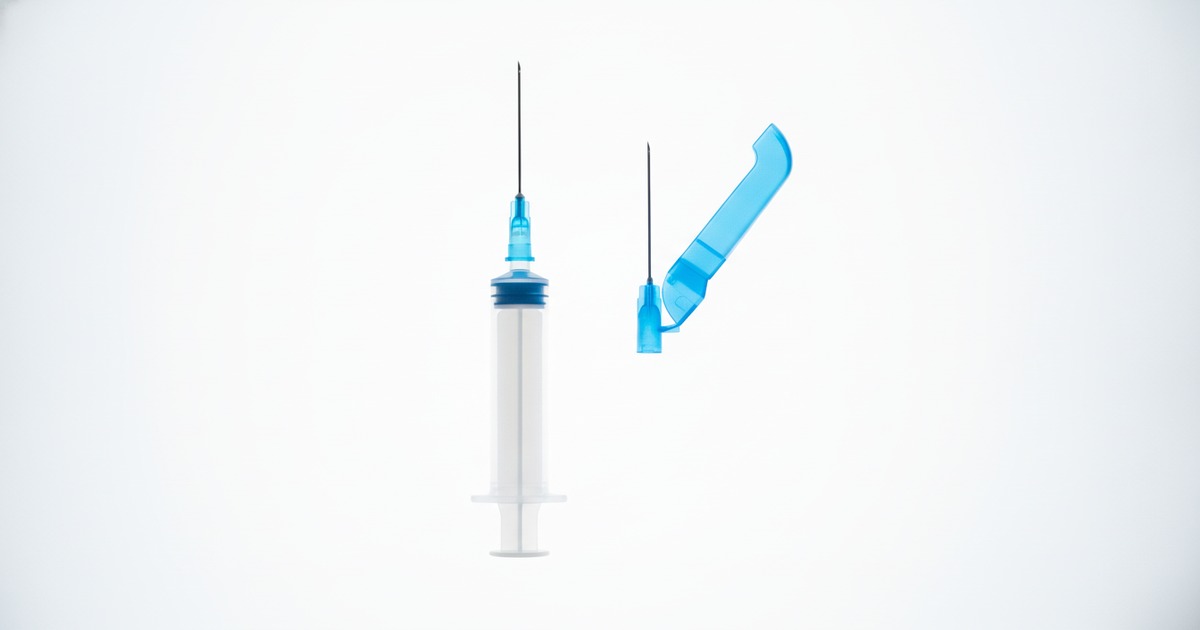
A safety syringe that "did not retract." A shield that "got in the way." A needlestick with a safety device in hand. When entries like these fill a sharps injury log, the device takes the blame. Surveillance data tell a different story: most injuries involving safety-engineered devices happen before or without activation. This guide covers how safety syringes and retractable needles work, what separates passive from active designs, and how to evaluate a device before standardizing on it.
The Occupational Safety and Health Administration (OSHA) Bloodborne Pathogens Standard defines engineering controls to include "self-sheathing needles, safer medical devices, such as sharps with engineered sharps injury protections and needleless systems." It prohibits recapping contaminated needles except in narrow circumstances and gives employers three recurring duties: document annually that safer devices were considered, solicit input from non-managerial direct-care staff when selecting them, and keep a sharps injury log that records the type and brand of device in every injury.
OSHA's guidance on evaluating and controlling exposure states that 62 to 88 percent of sharps injuries can be prevented by using safer medical devices. Our overview of OSHA compliance and sharps safety solutions covers the wider standard.
A passive device deploys its protection as part of the injection itself. On a retractable syringe, fully depressing the plunger triggers retraction of the needle into the barrel, so there is no separate safety step and no capping step. An active device requires a separate step afterward: flipping a hinged shield, sliding a sheath, or pressing a button.
The distinction is measurable. A French multicenter study of 61 hospitals tracked more than 22 million safety-engineered devices over two years and 453 device-related needlestick injuries, a mean of 2.05 per 100,000 devices. Passive devices had the lowest rate, followed by semiautomatic devices, then manually activated toppling shields, then manually activated sliding shields.
Regional surveillance from Piedmont, Italy, shows the gradient in practice. Of 1,640 needlestick injuries in 2015 and 2016, 18 percent involved a safety device. In 81 percent of those, the mechanism had not been activated, 45 percent occurred during disposal, and 92 percent of the devices relied on manual activation. The authors recommended selecting devices with passive activation.
MYCO Medical carries both families. The RELI® WEALY® Retractable Safety Syringe uses passive activation of needle retraction, which eliminates the capping step, and is designed for single-handed operation. It comes in 1 mL to 10 mL volumes with color-coded needles from 20G to 27G, and the 1 mL version has low dead space. The RELI® WEALY® Retractable Safety Insulin Syringes retract immediately after use. On the active side, the RELI® Safety Hypodermic Needle uses a flip-hinged shield with tactile, one-handed activation, and when the shield is up, the bevel is up. The RELI® Safety Insulin Syringes use a clear sliding shield with a permanent twist-lock. Our guide to mixed-fleet transitions argues for putting passive devices in the highest-volume, highest-pressure areas, where a missed activation step is most likely.
According to Exposure Prevention Information Network (EPINet) figures reported by Medical Laboratory Observer, 50.4 percent of sharps injuries in 2023 occurred during device use, before any safety mechanism was activated, and 27.3 percent were sustained while using a safety-engineered device. Devices with no safety mechanism still accounted for 66.9 percent of injuries. The same article cites the Centers for Disease Control and Prevention (CDC) estimate of about 385,000 sharps injuries to hospital-based personnel each year.
When a safety syringe is blamed, four questions usually locate the real cause.
Simulation work points the same way. In a series of simulation studies of a fully passive safety needle, 104 physicians, nurses, and pharmacists completed 932 injections with no needlestick injuries, and the use errors that occurred arose mostly from participants' mental model, meaning habits carried over from other devices. In a randomized crossover trial with 76 nurses, a retractable safety needle significantly reduced near-miss events and needle exposure compared with a cap-type safety needle, with no difference in usability, but required a mean of 75.6 seconds more preparation time, a cost to plan for during rollout.
A retracting needle moves fast, and residual fluid can move with it. In a laboratory study of a retractable intravascular catheter, not a syringe but the same retraction principle, 105 simulated venipunctures were performed with mock blood and the retraction mechanism was activated in a chamber lined with filters. Splatter reached the closest filter in 70 percent of activations, and in 7 percent of cases only a microscope detected it. A separate report on three commonly used active safety needles described spatter after syringe discharge and safety activation as a new and significant hazard.
These findings do not argue against retraction. They argue for following the instructions for use, activating with the tip pointed away from the face, and treating eye protection as part of the procedure. They also explain why a "the needle sprayed" complaint deserves a device-specific answer.
Dead space is the second detail worth checking: fluid left in the hub and needle after the plunger bottoms out is wasted with every dose, and on a 1 mL syringe that can be a meaningful fraction of the drug.
The stakes are quantifiable. A systematic review of 14 economic studies found a median cost of 747 international dollars per needlestick injury in 2015 terms, with a range of 199 to 1,691, excluding treatment of any resulting infection. Against the per-unit price difference between conventional and safety devices, the arithmetic favors the device that gets activated every time. The evidence above translates into a short checklist.
MYCO Medical supplies passive and active safety devices across its needles and syringes portfolio. If your facility is preparing its annual device review or fielding "the safety feature failed" reports, contact our sales team to request samples for evaluation in the volumes and gauges your units use.
What is a safety syringe?
A syringe with an engineered feature that covers or retracts the needle after use. OSHA classifies these devices as engineering controls under the Bloodborne Pathogens Standard.
What is the difference between a retractable syringe and a safety needle with a shield?
A retractable syringe pulls the needle inside the barrel when the plunger is fully depressed, so activation is passive. A shielded safety needle requires the user to flip or slide a cover over the needle afterward, an active step.
Are passive safety devices better than active ones?
In a French multicenter study, passive devices had the lowest needlestick rate, followed by semiautomatic devices, then manually activated shields. Active devices still protect when activated consistently, so the choice depends on where activation is most likely to be skipped.
Why do needlestick injuries still happen with safety syringes?
Most occur during use, before any mechanism can act, or because the feature was never activated. Regional surveillance found the mechanism inactivated in 81 percent of safety-device injuries.
Do retractable syringes splatter blood?
Laboratory studies have detected splatter from some retracting and active safety devices, sometimes visible only under a microscope. Follow the instructions for use, activate with the tip away from the face, and wear eye protection.
Does OSHA require safety syringes?
OSHA requires engineering controls, including safer medical devices, and requires employers to document annually that such devices were considered and to involve frontline staff in selecting them. It does not name specific products.

%20(1).jpg)
.jpg)
%20(2).jpg)